



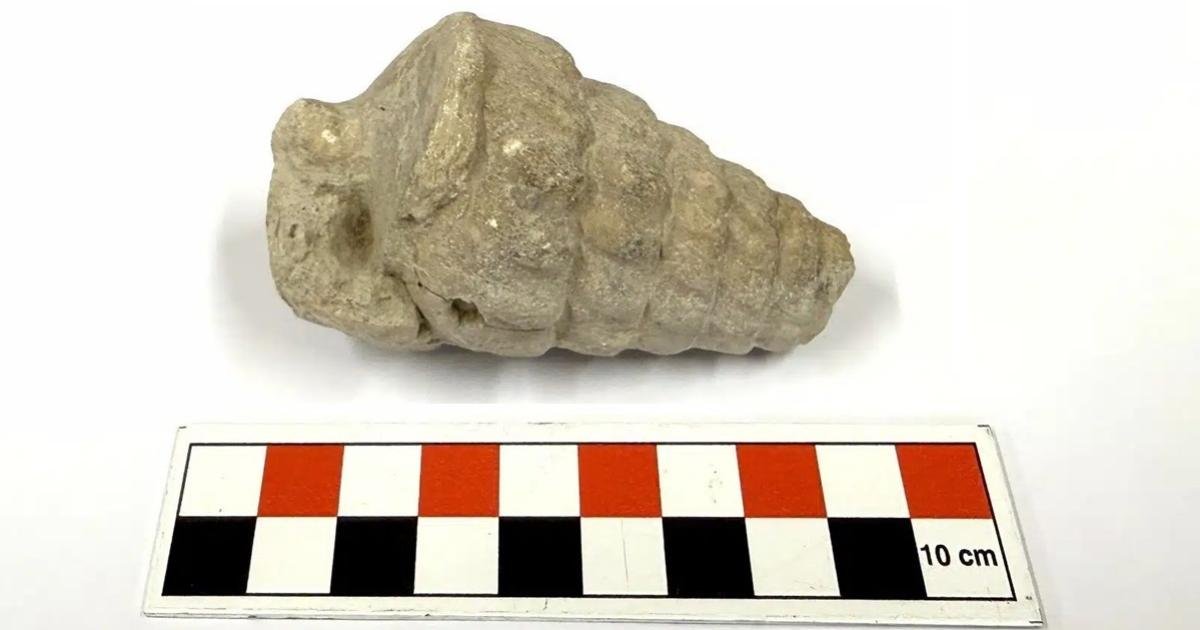
Archaeologists working at Külhöyük in Ankara's Gölbaşı district have discovered a gastropod fossil believed to be about 66 million years old. Türkiye's Culture and Tourism Minister Mehmet Nuri Ersoy said the marine creature lived near the shores of the ancient Tethys Sea. The discovery offers evidence of Ankara's natural history from a period long before human settlement in the region.
The Tethys Sea began forming about 250 million years ago and once covered parts of Central Anatolia. Researchers believe the fossil belongs to the final stages of that ancient body of water. Its presence therefore links the modern landlocked area around Ankara to a distant geological period when marine life existed there.
The object was uncovered at Külhöyük, a settlement associated with the Hatti and Hittite civilisations and dated to about 5,000 years ago. Ersoy said researchers are considering whether the settlement's inhabitants may have found the fossil and carried it to the site thousands of years ago. If confirmed, that possibility would show that ancient residents noticed and collected unusual objects from the natural world around them.
The fossil follows another recent find at Külhöyük: seed remains of the Love Flower discovered inside a 4,000-year-old Hittite vessel. Archaeologists believe those may be the oldest known remains of that plant. Together, the discoveries show how one excavation site can hold evidence from very different periods, ranging from the age of the Tethys Sea to the daily life and interests of early Anatolian communities.
- Business News 112
- Country News 16
- Feature News 60
- International News 229
- Interview News 36
- National News 32