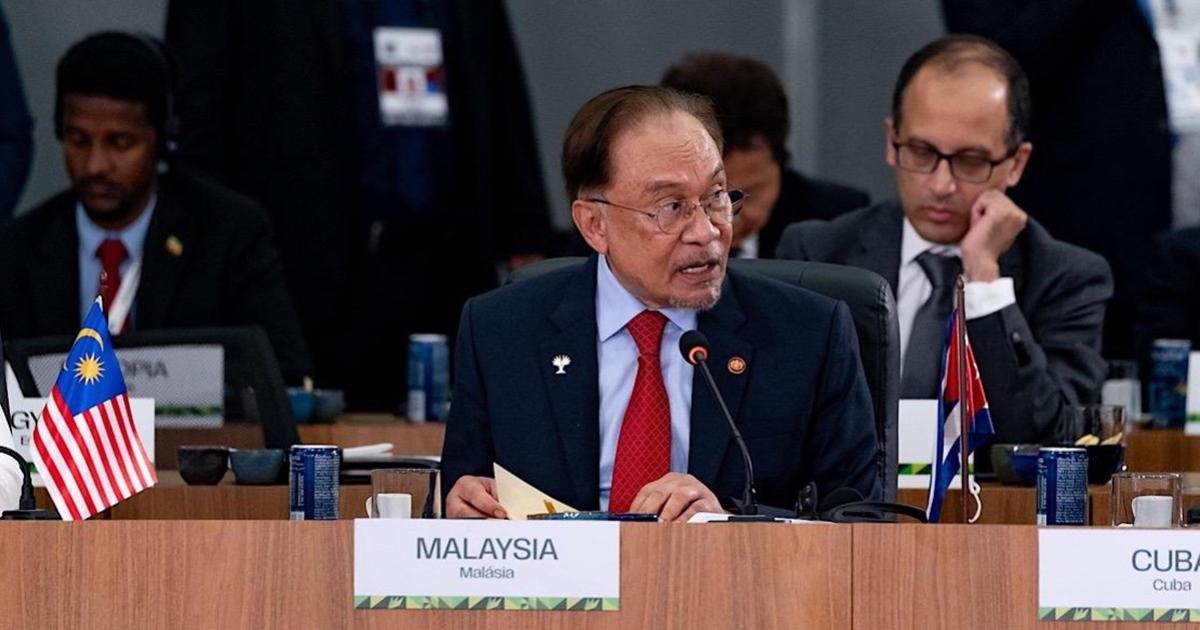




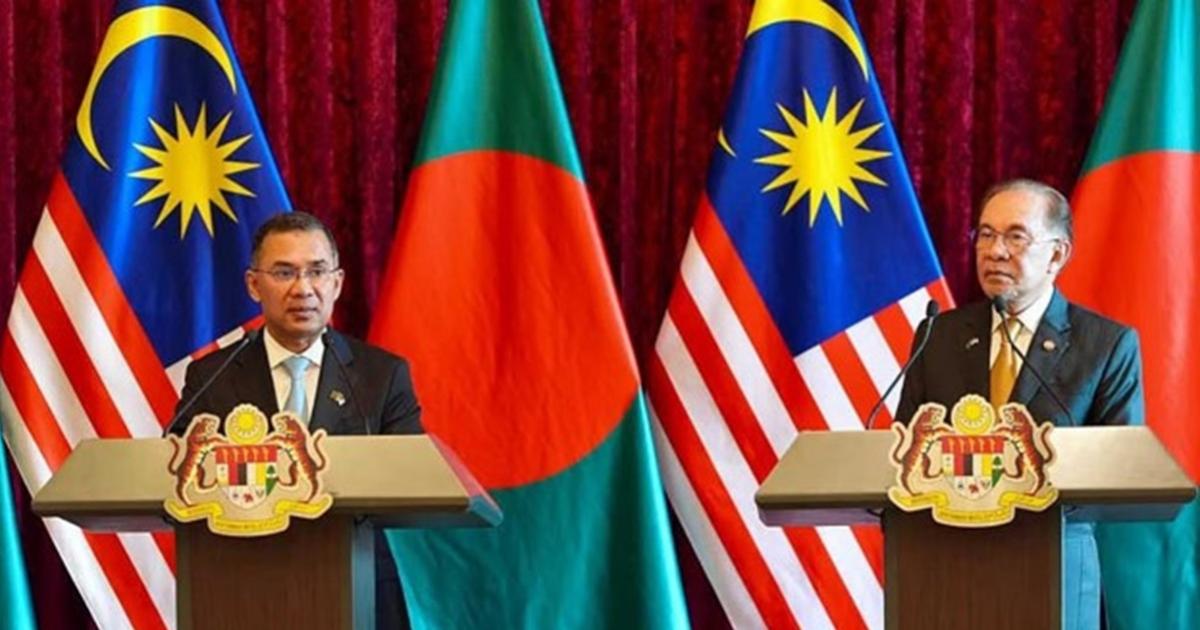
PUTRAJAYA: Bangladesh Prime Minister Tarique Rahman has asked Malaysia to reopen its labour market to Bangladeshi workers, as Dhaka and Kuala Lumpur agreed to work on a cleaner and more transparent recruitment system. The request was raised during bilateral talks with Malaysian Prime Minister Datuk Seri Anwar Ibrahim in Putrajaya on Monday, June 22.
Tarique, who took office in February, chose Malaysia for his first official foreign visit. He was given an official welcome at Perdana Putra, where Anwar received him at 9am. The national anthems of both countries were played, and the Bangladesh leader later inspected a guard of honour comprising 103 personnel and three officers from the First Battalion, Royal Malay Regiment.
Deputy Prime Minister Datuk Seri Ahmad Zahid Hamidi and members of the Malaysian Cabinet were also present at the ceremony. Tarique arrived in Malaysia on Sunday, June 21, with his spouse Dr Zubaida Rahman for a two-day official visit. The trip comes as Bangladesh seeks stronger ties with Asian partners, more overseas employment opportunities, and greater foreign investment.
At a joint press conference after the talks, Tarique said he had asked Anwar to consider taking in more Bangladeshi workers. “I said to His Excellency Anwar, consider recruiting more Bangladeshi workers, as well as open up the labour market,” he said. He also raised the issue of undocumented Bangladeshi workers in Malaysia and, where possible, the repatriation of detained Bangladeshis.
Malaysia has been an important destination for Bangladeshi migrant workers for many years. Remittances from overseas workers are a major source of foreign exchange for Bangladesh, making access to Malaysia’s labour market economically important for Dhaka. However, Malaysia has restricted the hiring of workers from Bangladesh since 2024 following reports of debt bondage, forced labour, and abuse in the recruitment process.
The recruitment system has faced strong criticism after workers reportedly paid large sums to secure jobs in Malaysia, only to face exploitation or find that the jobs promised by agents did not exist. Hundreds of workers were reportedly left stranded in 2023 after arriving in Malaysia without the employment they had been assured of. Such cases left many exposed to illegal work, detention, and deportation risks.
Both leaders said they agreed on the need to reform the recruitment process. Tarique said recruitment should be “transparent, fair and affordable,” with fewer intermediaries and lower costs for workers. Anwar said Malaysia needs foreign workers, but their welfare must be protected.
The Malaysian prime minister was direct in his criticism of worker abuse. “This continued abuse of workers, purely for personal gain, cannot be tolerated,” Anwar said. He added that while Malaysia depends on foreign labour in several sectors, the protection of workers and their families must come first.
Malaysia is one of the region’s largest importers of foreign labour. As of November last year, the country had about 2.1 million registered low-skilled foreign workers across sectors such as construction, manufacturing, plantations, and services. The issue remains sensitive because Malaysia’s economy needs migrant labour, but recruitment scandals have raised concerns among rights groups, foreign governments, and Malaysian authorities.
Malaysian officials have already signalled plans to change the system. Human Resources Minister Datuk Seri R. Ramanan said in February that a new direct hiring system for foreign workers was being prepared. In April, Home Minister Datuk Seri Saifuddin Nasution Ismail said the proposed recruitment system would be presented to the Cabinet for deliberation.
Beyond labour issues, Malaysia and Bangladesh also discussed the Rohingya crisis. Anwar said the two countries would work together to address the plight of Rohingya refugees in Bangladesh and Malaysia, including by engaging Myanmar through Asean mechanisms. He said the work would be carried forward through the offices of the foreign ministers of both countries.
Bangladesh hosts a large Rohingya refugee population, while Malaysia has also received many Rohingya over the years. Anwar said both governments would seek ways to address the issue through common efforts. He also said Malaysia and Bangladesh shared similar positions on several international matters, including Palestine and the situation in Gaza.
The visit also covered trade, investment, education, energy, agriculture, semiconductors, and manpower management. The two leaders witnessed the exchange of a Memorandum of Understanding on cultural cooperation. They also oversaw two Exchanges of Notes covering counter-terrorism research and investment promotion and facilitation.
The two countries also pledged to move forward with negotiations on a free trade agreement. Such an agreement would add a new layer to economic ties between Kuala Lumpur and Dhaka. Bangladesh is already Malaysia’s second-largest trading partner, export destination, and import source in South Asia after India.
Total trade between Malaysia and Bangladesh reached RM12.18 billion, or about US$2.84 billion, in 2025. Malaysia’s exports to Bangladesh stood at RM10.08 billion, led by petroleum products. Imports from Bangladesh came to RM2.1 billion, made up mainly of textiles, apparel, and footwear.
Anwar also spoke warmly about his personal ties with Tarique and his family. He said he had known the family for years, recalling his first meeting with them when he was a youth leader and later as deputy prime minister. He described Tarique as part of an “enlarged family” and said he looked forward to strengthening the relationship between the two countries.
For Bangladesh, the visit carries economic and diplomatic importance. Dhaka is seeking better access to overseas labour markets, more secure conditions for its migrant workers, and stronger cooperation with regional partners. For Malaysia, the talks offer a chance to address labour shortages while responding to pressure to prevent exploitation in the recruitment process.
Tarique is expected to travel to China next for a three-day visit at the invitation of Chinese Premier Li Qiang. His overseas engagements come at a time when Bangladesh is working to expand trade, secure investment, and strengthen relations with major Asian economies. The Malaysia visit placed labour rights, migration governance, trade, and refugee concerns at the centre of the discussion.
- Business News 111
- Country News 16
- Feature News 57
- International News 228
- Interview News 36
- National News 31