



Palestine marks Independence Day today, 15 November, recalling the declaration of the State of Palestine in Algiers in 1988. The date brings attention to a national identity that people express in many ordinary ways, from the stories they tell to the food they set out for guests. Palestinian communities at home and abroad keep those customs in different settings. A closer look at a few of them shows how people pass on a sense of place to children who may grow up far from their parents’ hometowns.
The olive harvest is one of the clearest examples. In the autumn, families who have access to groves gather olives, and a visit to the press turns the fruit into oil that can be used throughout the year. Fresh oil may be tasted with bread or served with za’atar, the herb mixture familiar across the region. The harvest also gives children a chance to learn which trees ripen first and how to handle the fruit so that it keeps its quality.
Olive oil has a place in Palestinian kitchens well beyond the harvest season. In musakhan, it carries the flavour of onions and sumac into flatbread served with chicken, a dish made for sharing. In Nablus, olive oil also gives traditional soap its main ingredient. Soap makers boil the mixture, spread it to cool and cut it into bars, creating a household product that connects the groves with workshops in town.
Another part of that shared inheritance can be seen in a dress. Tatreez, the Palestinian practice of embroidery, is on UNESCO’s list of intangible cultural heritage. Patterns placed on the chest, sleeves and other parts of a garment have long carried associations with particular towns or regions. Practitioners also use the stitches on cushions, bags and contemporary clothing, making room for younger makers to work with familiar designs in forms that suit their lives.
The details matter because two garments that look similar from across a room can tell different stories at close range. A maker might recognise a motif learned from a grandmother or point out a change in colour made to suit the person who will wear it. Classes and community groups help people learn those details, including members of the diaspora who may come to the tradition through a single family garment. Knowing the names of stitches and patterns allows them to teach someone else.
Palestinian music and dance offer more public ways to share a memory. At celebrations, dabke brings dancers together in a line, and the group keeps time through steps that can be learned by watching the people beside them. Poetry has a different place in daily life, whether read privately, performed or discussed at school. Mahmoud Darwish is one of the best-known Palestinian poets internationally, and readers encounter his writing through translations as well as in Arabic.
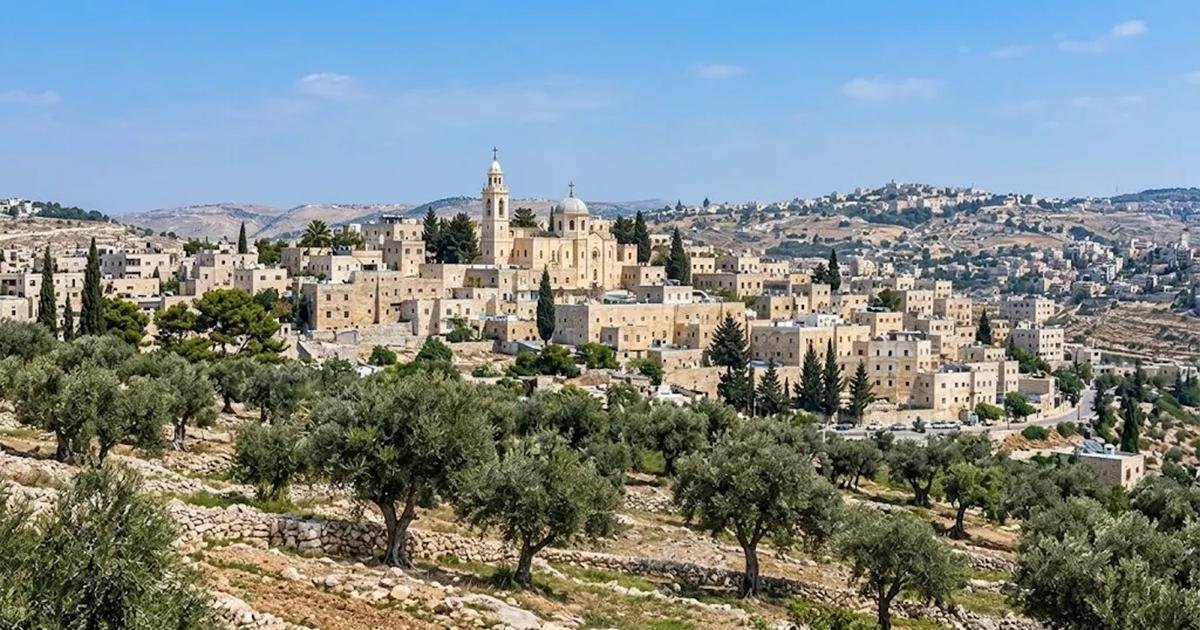
Places add their own details to these traditions. In Bethlehem, the Church of the Nativity is part of a UNESCO World Heritage site and a destination for pilgrims and visitors. In Hebron, glassblowers shape heated glass into vessels and ornaments, and in Nablus, sweets such as knafeh are part of the city’s reputation for hospitality. These examples show how a town can be known through the work of people who have spent years learning a local skill.
Culture also has a practical role in education and livelihoods. When a workshop teaches a skill to a new group, it creates a chance for learners to earn income and pass on what they know. Teachers, writers and archivists do similar work with photographs, recordings and family histories. As a member of the Organisation of Islamic Cooperation, Palestine brings these experiences to a wider community where many societies face their own questions about preserving knowledge as people move and livelihoods change.
On 15 November, the declaration of 1988 gives Palestine Independence Day its historical reference. The day also gives people a reason to pay attention to traditions that rely on being used and taught. A pattern saved from an old dress, the first taste of oil after pressing and the steps of a dance learned at a family gathering are modest examples of how that happens. Each can start a conversation between generations, and each gives someone a way to take part in a tradition that is still developing.
- Business News 117
- Country News 16
- Feature News 67
- International News 253
- Interview News 36
- National News 42